

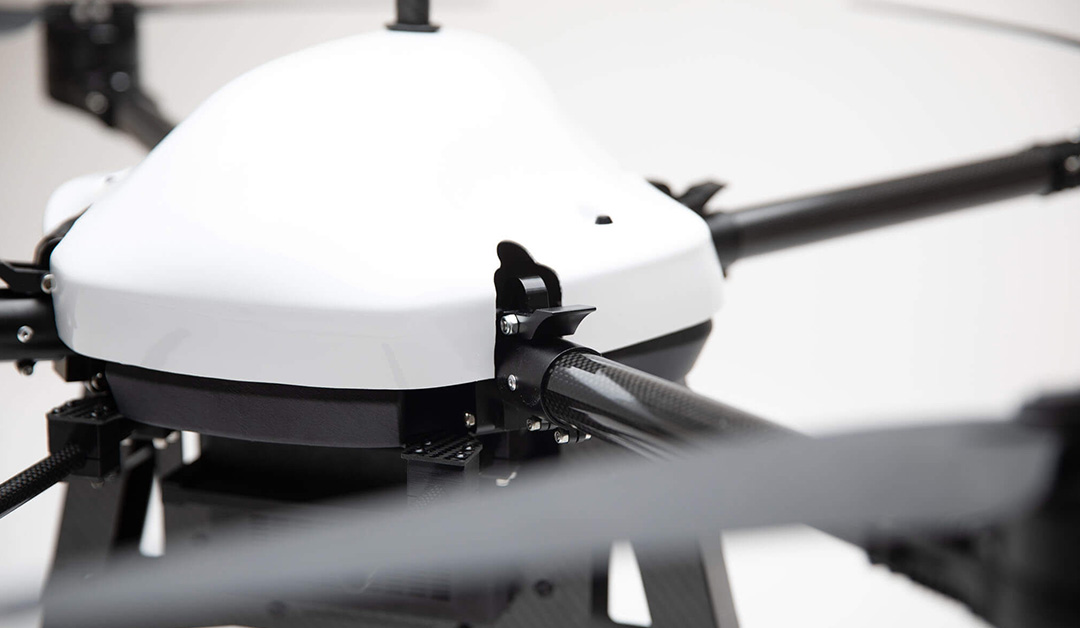
When researchers at Linköping University (LiU) set out to investigate greenhouse gas emissions from wastewater treatment plants, they faced a significant challenge: how to measure gases escaping from massive outdoor sludge piles. To address this, Airolit and Sparv Embedded delivered a joint system to the university.
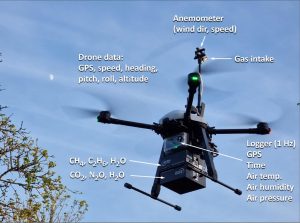
Environ. Sci. Technol. 2025, 59, 34, 18146-18155
Wastewater plants are essential for providing clean water, but they also release greenhouse gases. Standard models and estimates had suggested relatively modest emissions, yet plant operators lacked a clear picture of what was actually happening in the air above their facilities. What was missing was reliable, real-world data. For this study, Airolit integrated advanced sensor equipment from Sparv Embedded onto the XLT drone platform – making it possible to capture air samples directly above the sites, an area previously difficult to access with conventional methods.
Providing a complete picture of emissions
With Airolit’s drone technology, researchers were able to track invisible plumes of methane and nitrous oxide as they rose from sludge storage. The drones provided a comprehensive overview of emissions under real operating conditions – something that has been very difficult to achieve with ground-based methods.
The results
- Emissions were found to be more than double the levels suggested by official estimates.
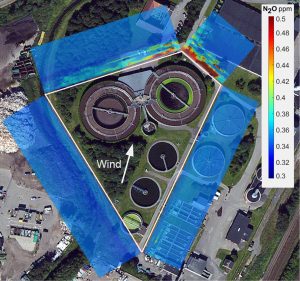
Environ. Sci. Technol. 2025, 59, 34, 18146-18155
- Nitrous oxide (N₂O), often overlooked, proved to be a major contributor.
- Sludge storage, once considered minor, was revealed as a significant source of emissions.
These findings give wastewater operators valuable tools to target climate measures where they will have the greatest effect. Supported by research from Linköping University, this collaboration demonstrates how drones and advanced sensor systems together can provide access to data that is otherwise difficult to obtain. The results equip both researchers and operators with more reliable knowledge about emissions, supporting decision-making and long-term planning in areas of societal importance.
Source: Gålfalk M & Bastviken D. 2025. Environmental Science & Technology 59: 18146-18155. DOI: 10.1021/acs.est.5c04780 )
Read the full study here.